


A Curriculum Grounded by Mission

KEEN MINDS
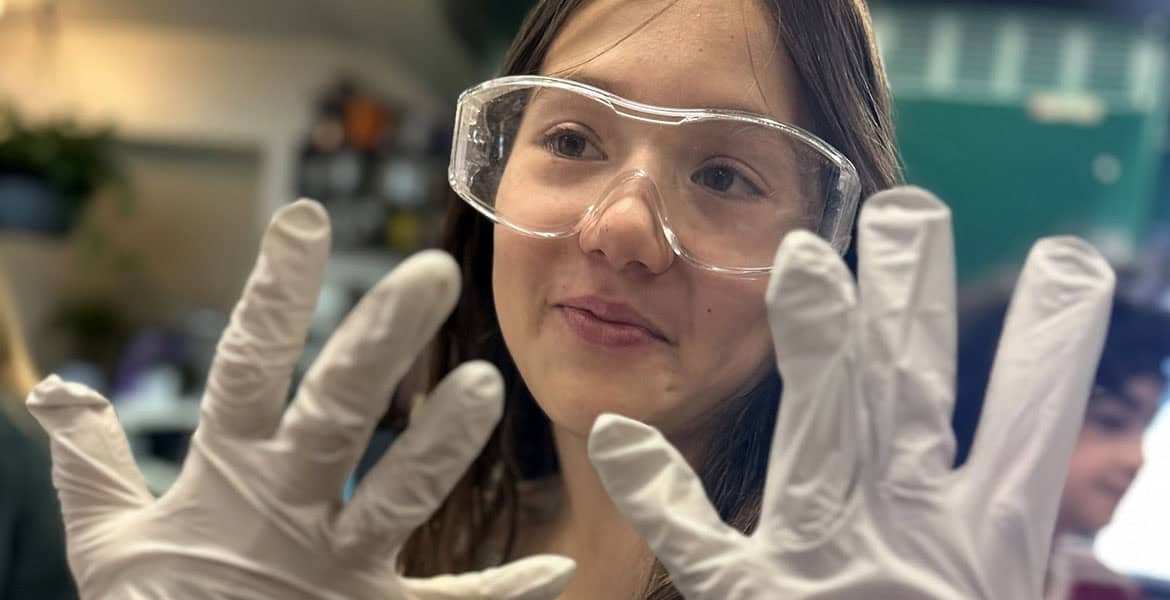
At Mack Boulder, gifted and creative students thrive to their full potential. Our students crave the challenge of meaningful questions and real-world problem solving. We strive to intentionally preserve and nurture the natural curiosity and creativity that children enter school with. Our inquiry-based IB curriculum incorporates challenging academics, action oriented projects, and integrated arts, physical education, world language, library, design, and technology through interdisciplinary learning.

COMPASSIONATE HEARTS
We believe academic knowledge is only part of the big picture. At Mack Boulder, we seek to grow courageous risk takers, good communicators and powerful innovators who meet the world with a deep sense of empathy and balance to all they do. Social-emotional learning (SEL) is a daily practice, integrated into our daily practices, curriculum, and weekly SEL classes.

GLOBAL ACTION
Our IB curriculum encourages design thinking, innovation, and sustainability so students can become meaningful contributors and socially responsible citizens of the world. We strive to be a wise, empathetic, collaborative, innovative, diverse, and sustainable center for teaching and learning. Mack Boulder students are taught how to learn conceptually so they can approach the problems of tomorrow with exceptional depth, breadth, and compassion. The IB programmes in our indepenedent school are carefully thought out and executed to give our students the best education possible.
Academics Overview
A Curriculum Grounded by Mission
KEEN MINDS
At Mack Boulder, gifted and creative students thrive to their full potential. Our students crave the challenge of meaningful questions and real-world problem solving. We strive to intentionally preserve and nurture the natural curiosity and creativity that children enter school with. Our inquiry-based IB curriculum incorporates challenging academics, action oriented projects, and integrated arts, physical education, world language, library, design, and technology through interdisciplinary learning.
COMPASSIONATE HEARTS
We believe academic knowledge is only part of the big picture. At Mack Boulder, we seek to grow courageous risk takers, good communicators and powerful innovators who meet the world with a deep sense of empathy and balance to all they do. Social-emotional learning (SEL) is a daily practice, integrated into our daily practices, curriculum, and weekly SEL classes.
GLOBAL ACTION
Our IB curriculum encourages design thinking, innovation, and sustainability so students can become meaningful contributors and socially responsible citizens of the world. We strive to be a wise, empathetic, collaborative, innovative, diverse, and sustainable center for teaching and learning. Mack Boulder students are taught how to learn conceptually so they can approach the problems of tomorrow with exceptional depth, breadth, and compassion. The IB programmes in our indepenedent school are carefully thought out and executed to give our students the best education possible.

Our Commitment to IB Principles and Practices
An official International Baccalaureate (IB) World School since 2006, Mackintosh Academy Boulder joins nearly 4,000 schools in 146 countries worldwide in preparing today’s students for tomorrow’s world through inquiry-based learning.

Our IB PYP and IB MYP Gifted program curriculum:
- Encourages students to think as global citizens, and to be meaningful contributors and socially responsible citizens in the world.
- Addresses the whole child—the social, emotional, physical, cultural needs of children, in addition to academic challenges.
- Emphasizes thematic study and project-based learning to create opportunities for exploration, active learning, and meaningful connections across subject areas.
IB also means inquiry-based learning: At Mack Boulder, we believe the questions are as important as the answers. Inquiry is at the heart of Mack Boulder’s pedagogical approach. Students and teachers at Mackintosh Academy never stop asking why, so what, and now what? Lines of inquiry provide a roadmap for students to travel, while optimizing knowledge, curiosity, and creative learning. Inquiry-based curriculum hones students’ self-initiative, organization, collaboration, communication, informational literacy, and high-level thinking skills. Mack Boulder’s IB program focuses on units of inquiry spread across the primary and middle school years. Each unit includes a theme of study explored across multiple disciplines, from reading and writing, to math, sciences, social studies, arts, world language, and even PE. Each unit culminates in creative and meaningful student projects, which are the hallmark of our IB program.
Our Commitment to IB Principles and Practices
An official International Baccalaureate (IB) World School since 2006, Mackintosh Academy Boulder joins nearly 4,000 schools in 146 countries worldwide in preparing today’s students for tomorrow’s world through inquiry-based learning.
Our IB PYP and IB MYP Gifted program curriculum:
- Encourages students to think as global citizens, and to be meaningful contributors and socially responsible citizens in the world.
- Addresses the whole child—the social, emotional, physical, cultural needs of children, in addition to academic challenges.
- Emphasizes thematic study and project-based learning to create opportunities for exploration, active learning, and meaningful connections across subject areas.
IB also means inquiry-based learning: At Mack Boulder, we believe the questions are as important as the answers. Inquiry is at the heart of Mack Boulder’s pedagogical approach. Students and teachers at Mackintosh Academy never stop asking why, so what, and now what? Lines of inquiry provide a roadmap for students to travel, while optimizing knowledge, curiosity, and creative learning. Inquiry-based curriculum hones students’ self-initiative, organization, collaboration, communication, informational literacy, and high-level thinking skills. Mack Boulder’s IB program focuses on units of inquiry spread across the primary and middle school years. Each unit includes a theme of study explored across multiple disciplines, from reading and writing, to math, sciences, social studies, arts, world language, and even PE. Each unit culminates in creative and meaningful student projects, which are the hallmark of our IB program.

Our Commitment & Approach to Core Academics
During the past four years we have taken a comprehensive and deep dive into improving the core academic areas of reading, writing, and math. As an IB World School, we have high standards to aspire to that interconnect each of these areas, and we also look at best independent practices in each area to guide our instruction. Here is some summary information about our approach and growth in each of the following areas:


LITERACY:
At Mackintosh Academy Boulder, we believe in empowering our students with the essential skills to navigate the world of language and communication effectively. Our literacy program is designed to foster a love for reading, writing, and critical thinking from an early age. Our Lower School (K-5) uses Collaborative Literacy, an integrated literacy program developed by Collaborative Classroom. This Colorado READ Act approved curriculum emphasizes a holistic approach to literacy education, focusing not only on academic skills but also on social and emotional development. The program aims to create a supportive and collaborative learning environment. Our Middle School uses Nancy Atwell’s approach to teaching and developing readers and writers. We also support our Middle School writers using Patterns of Power to teach writing conventions.
Here is what you can expect from our literacy program:
Strong Foundations: We prioritize building strong foundational skills in reading, writing, speaking, and listening. Our early elementary teachers are Orton Gillingham trained and approach teaching reading through an explicit and multisensory approach. Our approach is structured yet our teachers are trained to be flexible, catering to the diverse learning styles and needs of our students.
Comprehensive Curriculum: Our curriculum is thoughtfully crafted to align with national standards and best practices in literacy education. From phonics and vocabulary development to comprehension strategies and literary analysis, each aspect of literacy is thoroughly explored.
Engaging and Diverse Resources: We utilize a variety of resources and materials to keep our students engaged and motivated. Whether it’s through literature, contemporary texts, digital resources, or interactive activities, we strive to make learning enjoyable and meaningful for all.
Differentiated Instruction: Recognizing that every student learns at their own pace, our teachers employ differentiated instruction techniques to meet the individual needs of each learner. Whether a student requires additional support or enrichment opportunities, we are dedicated to ensuring every child reaches their full potential. When needed, our talented learning specialists and Orchard Center teachers are available to provide multiple layers of support to students.
Integration Across Subjects: We believe that literacy is not confined to the Language Arts classroom alone. As an IB school, we integrate literacy skills across all subject areas, enabling students to apply their reading and writing abilities in various contexts.
Cultivating Critical Thinkers: Beyond acquiring basic literacy skills, our goal is to cultivate critical thinkers and lifelong learners. Through discussions, debates, and analysis of diverse texts, students develop the ability to think critically, communicate effectively, and engage meaningfully with the world around them.
Workshop Approach: The two biggest priorities guiding literacy instruction at Mack are that students should have choice in what they read and write and should have ample time every day to spend reading and writing. The love and confidence Mack students feel as readers and writers can largely be attributed to this approach. The approach helps students build an identity as readers and writers through choice and experiences with texts and writing projects that are important and meaningful to them.
Supportive Community: At Mack Boulder, we foster a supportive learning community where collaboration and communication are valued. Parents, teachers, and students work together to celebrate achievements, address challenges, and cultivate a culture of literacy excellence. At Mack, our goal is to unlock the power of literacy and inspire a new generation of confident, articulate, and empathetic individuals.
We are proud of our culture of reading and writing at Mack Boulder. While the average teenager reads seven books/year (assigned texts), our Mack Boulder learners often read between 30-70 books/year! Our culture of reading is supported by our exceptionally curated school library which grows daily.
MATHEMATICS:
We know that young mathematicians develop strong conceptual foundations for number sense, measurement, data, and geometry when they’re given opportunities to explore and play with mathematics. In the Lower School, we use the Illustrative Mathematics curriculum to implement a math workshop model that is centered on inquiry and justifying our thinking to give students authentic opportunities to build on new and existing knowledge. Through hands-on experiences and an emphasis on mathematical reasoning, students develop a deeper level of understanding about the logic behind common mathematical algorithms and formulas. This approach allows students to become risk takers and problem solvers in math and prepares them to transition into more complex mathematics in middle school and beyond.
Our Middle School has also aligned their math programming to our school wide, inquiry-based, constructivist approaches to learning. We created our math pathways using research-driven best practices, our IB MYP MYP Gifted program framework, and the culture of Mackintosh Academy Boulder. Math classes throughout the middle school are intentionally-sized that students receive differentiated, high-quality instruction. We use the award-winning, problem-based Illustrative Mathematics curriculum for our MYP 1, 2, and 3 level math courses in conjunction with the IB MYP framework, which emphasizes real-world math applications and strong mathematics communication skills. Our math courses are compacted so that students complete a traditional Algebra I curriculum by the end of the MYP 3 Math course. Those who demonstrate a need for more accelerated math options may continue with more advanced, high-school style courses on campus as well.
Our Commitment & Approach to Core Academics
During the past four years we have taken a comprehensive and deep dive into improving the core academic areas of reading, writing, and math. As an IB World School, we have high standards to aspire to that interconnect each of these areas, and we also look at best independent practices in each area to guide our instruction. Here is some summary information about our approach and growth in each of the following areas:
LITERACY:
At Mackintosh Academy Boulder, we believe in empowering our students with the essential skills to navigate the world of language and communication effectively. Our literacy program is designed to foster a love for reading, writing, and critical thinking from an early age. Our Lower School (K-5) uses Collaborative Literacy, an integrated literacy program developed by Collaborative Classroom. This Colorado READ Act approved curriculum emphasizes a holistic approach to literacy education, focusing not only on academic skills but also on social and emotional development. The program aims to create a supportive and collaborative learning environment. Our Middle School uses Nancy Atwell’s approach to teaching and developing readers and writers. We also support our Middle School writers using Patterns of Power to teach writing conventions.
Here is what you can expect from our literacy program:
Strong Foundations: We prioritize building strong foundational skills in reading, writing, speaking, and listening. Our early elementary teachers are Orton Gillingham trained and approach teaching reading through an explicit and multisensory approach. Our approach is structured yet our teachers are trained to be flexible, catering to the diverse learning styles and needs of our students.
Comprehensive Curriculum: Our curriculum is thoughtfully crafted to align with national standards and best practices in literacy education. From phonics and vocabulary development to comprehension strategies and literary analysis, each aspect of literacy is thoroughly explored.
Engaging and Diverse Resources: We utilize a variety of resources and materials to keep our students engaged and motivated. Whether it’s through literature, contemporary texts, digital resources, or interactive activities, we strive to make learning enjoyable and meaningful for all.
Differentiated Instruction: Recognizing that every student learns at their own pace, our teachers employ differentiated instruction techniques to meet the individual needs of each learner. Whether a student requires additional support or enrichment opportunities, we are dedicated to ensuring every child reaches their full potential. When needed, our talented learning specialists and Orchard Center teachers are available to provide multiple layers of support to students.
Integration Across Subjects: We believe that literacy is not confined to the Language Arts classroom alone. As an IB school, we integrate literacy skills across all subject areas, enabling students to apply their reading and writing abilities in various contexts.
Cultivating Critical Thinkers: Beyond acquiring basic literacy skills, our goal is to cultivate critical thinkers and lifelong learners. Through discussions, debates, and analysis of diverse texts, students develop the ability to think critically, communicate effectively, and engage meaningfully with the world around them.
Workshop Approach: The two biggest priorities guiding literacy instruction at Mack are that students should have choice in what they read and write and should have ample time every day to spend reading and writing. The love and confidence Mack students feel as readers and writers can largely be attributed to this approach. The approach helps students build an identity as readers and writers through choice and experiences with texts and writing projects that are important and meaningful to them.
Supportive Community: At Mack Boulder, we foster a supportive learning community where collaboration and communication are valued. Parents, teachers, and students work together to celebrate achievements, address challenges, and cultivate a culture of literacy excellence. At Mack, our goal is to unlock the power of literacy and inspire a new generation of confident, articulate, and empathetic individuals.
We are proud of our culture of reading and writing at Mack Boulder. While the average teenager reads seven books/year (assigned texts), our Mack Boulder learners often read between 30-70 books/year! Our culture of reading is supported by our exceptionally curated school library which grows daily.
MATHEMATICS:
We know that young mathematicians develop strong conceptual foundations for number sense, measurement, data, and geometry when they’re given opportunities to explore and play with mathematics. In the Lower School, we use the Illustrative Mathematics curriculum to implement a math workshop model that is centered on inquiry and justifying our thinking to give students authentic opportunities to build on new and existing knowledge. Through hands-on experiences and an emphasis on mathematical reasoning, students develop a deeper level of understanding about the logic behind common mathematical algorithms and formulas. This approach allows students to become risk takers and problem solvers in math and prepares them to transition into more complex mathematics in middle school and beyond.
Our Middle School has also aligned their math programming to our school wide, inquiry-based, constructivist approaches to learning. We created our math pathways using research-driven best practices, our IB MYP MYP Gifted program framework, and the culture of Mackintosh Academy Boulder. Math classes throughout the middle school are intentionally-sized that students receive differentiated, high-quality instruction. We use the award-winning, problem-based Illustrative Mathematics curriculum for our MYP 1, 2, and 3 level math courses in conjunction with the IB MYP framework, which emphasizes real-world math applications and strong mathematics communication skills. Our math courses are compacted so that students complete a traditional Algebra I curriculum by the end of the MYP 3 Math course. Those who demonstrate a need for more accelerated math options may continue with more advanced, high-school style courses on campus as well.
Ongoing Curricular Innovation
Making improvements to our K-8 curricula is an ongoing, yearly process. In addition to our yearly assessment and improvements to our IB program units, we have committed to improving core academics on a cycle that allows for constant assessment, design, implementation, and reflection. Here’s a visual snapshot of our last cycle:


Math Curriculum Transitioning & Improvements
At the end of the 16/17 school year, our K-8 team was tasked to focus on our mathematical pedagogy and practices during the 17/18 school year. In order to prepare for this work, our faculty was tasked with reading the book Mathematical Mindsets by Jo Boaler last summer. Boaler, a Professor of Mathematics Education at the Stanford Graduate School of Education, is involved in promoting mathematics education reform and equitable mathematics classrooms. Her work seeks to apply to math education the “growth mindset” work pioneered by Carol Dweck. The book blew our teachers’ minds and launched us into a deep self-reflection of our current pedagogy, practices, and programming.
Our ongoing discussions and reflections helped us clearly define areas for future improvement. Two areas stood out to all of us almost immediately: a universal concern that our curricula/programs were not best serving our needs, and that our current approach to grouping learners was antithetical to a healthy, growth mindset approach to learning mathematics. We decided we needed help and so invited a math consultant and teacher for the past 26 years, to visit for several days in the fall and again in the winter to help us examine our road ahead.
Our consultant spent time observing math lessons and then met with teachers individually and in groups. One of her most important initial observations was that our current programs (Singapore and Pearson Common Core) weren’t “aligned with how our teachers teach nor how our students best learn.” Throughout the school day, Mack teachers approach learning through an inquiry-based, constructivist approach, but Singapore (LS) and Pearson Common Core (MS) were leading to a far too teacher-directed approach. She helped remind our team that our pedagogical approach should drive the curriculum, not the other way around.
We also realized that our current practices of grouping by acceleration (mostly in grades 2 onward) are not necessarily the best path/approach for many of our students. As students progressed through Mack, we have been increasing the number of groupings mostly to address the extremes of learners who go need to go slower or faster. In both cases, we have not been serving learners in optimal ways. Those in the slower groups have been developing negative math mindsets (“I must not be good at math”) and those in the faster groups can suffer from rapid acceleration that can lead to a knowledge base that becomes more like “swiss cheese than cheddar.” As a gifted school, however, we know that we are charged with managing this dilemma in the best possible way to address our wide range of learners who need occasional remediation to those who require a faster pace. This balance became part of our decision-making process as we reflected and planned with our consultant’s guidance.
Further discussions that culminated in the winter led us to realize that we needed to make some improvements to our pedagogical approach, and that we needed new math curriculum/programs to help make that happen. Our overarching goal was to find programming that: is aligned with our pedagogical and philosophical approach, is research-based, actively adds updated versions based on feedback, is rich in program materials, and provides a solid base of ongoing PD for our teachers. We all agreed that our current Singapore (LS) and Pearson Common Core (MS) programs have very few of these points at the level we need.
After our consultant spent the days in the classrooms and with teachers, she recommended we pilot two established and respected programs for the K-5 students (Bridges and Investigations). Both of these programs had the criteria we were looking for and were NCTM supported programs with solid track records for success. Many of our teachers taught one of the programs in previous schools and loved them. Over 3-4 months this winter/spring, K-5 teachers piloted both programs in their math classes and then provided feedback. The same process happened in our Middle School, where teachers piloted four major programs that were recommended by our consultant and aligned with our Middle School needs.
In April, a math committee met several times to collect and analyze our findings. Our consultant supported us in the process of aligning our initial goals with feedback on each program. The key areas we focused on during our reflections and subsequent decision-making processes were:
- Overall fit with our curricular and pedagogical needs.
- Level of student engagement/enthusiasm
- Pacing
- Building strong number sense that leads to deep mathematical thinking
- Embedded differentiation support—remediation and extension provided within each lesson
- Regular review and practice
- Resources supplied with the package
- Built-in professional development
- Assessment strategy and materials
- Real-world applications
We were thrilled to find one program that seemed like a perfect fit for our Lower School and two programs aligned with our Middle School. For the Lower School, we selected a long-standing, exemplary program called Investigations in Number, Data and Space (3rd Edition) to best serve our curricular and pedagogical needs. For our Middle School, we selected two programs: Illustrative Math (IM) and Mathematics Vision Project (MVP) to support our needs. After we made these decisions, we done into important work of transitioning and launching the programs in the 18/19 school year.
That process started with a guided approach to year-end assessing (our consultant supported us before/during/after). Our goal with the yearend assessment was to make sure we had enough data to support our work in creating math groupings for the future school year. For Lower School students, our aim was place the vast majority of students in grade-level groupings that will be taught by their homeroom teachers who ensured that students were properly supported and challenged. By creating math groups closer to homerooms, we deliberately moved away from our current math level groupings where some grades (ie: 5th this year) have five separate math classes within the grade.
Our overarching goal was to make groups that moved towards “cheddar” and away from “swiss cheese” development. We were confident that our new programs had the necessary elements for supporting students who need more time to process as well as students who process at a faster pace. We also purchased the entire package for all of the math programs. Our Lower School teachers were thrilled about the many resources that Investigations provides, including manipulatives, assessment materials, fluency support, and games.
We are also hiring our consultant to run two full days of PD in June to launch the new programs and train our teachers. She helped us analyze our assessments to create math groupings. She returned in August during staff week, and then again once a month or so the following next school year as a math coach to ensure everything is happening as planned. Thank you to our auction’s Stand by Mack Live Appealfor providing this funding!
Some additional information on Middle School Improvements: Our Middle School also worked with our consultant since the fall of 2017 to align our pedagogy to be more in line with our inquiry-based, constructivist approaches to learning. After much research into local, national, and IB MYP best practices, we decided to create a more clearly defined pathway for math learning. Our updated plan was not a radical divergence from what we had before, but we did feel it has been more logical, aligned, and manageable. Here is a snapshot of the new levels and how they correspond to various grade-levels and courses:
- MYP Math 1 (utilizes Illustrative Math Grade 7 Curriculum) → This is “on grade level” course for our 6th graders, single subject acceleration (1 year) for our 5th graders
- MYP Math 2 (utilizes Illustrative Math Grade 8 Curriculum) → This is “on grade level” course for our 7th graders, single subject acceleration (1 year) for our 6th graders
- MYP Math 3 (utilizes MVP Honors Algebra 1 curriculum- HS/IM Algebra 1 curriculum) → This is a traditional Algebra 1 course using H.S. CCSS standards and rigor
- Honors Geometry → (utilizes MVP Honors Geometry curriculum + IM Geometry curriculum) → This is a traditional “proof” geometry course traditionally encountered in 9th or 10th grade
- Algebra 1B (18/19 year only): this was a phase-out of our 1A/1B sequence
We continue to support MS acceleration (ie: 2 year) as needed for current and future students. This can be more easily achieved in the MYP program. In addition to aligning our MS program with our LS program, some of our goals and reasoning for making changes to our Middle School program included:
- Goal: to compact Algebra 1 to a single year, as per traditional standards
- Goal: To provide Algebra 1 as an 8th grade course
- Goal: To create a cohesive, rigorous math course sequence that gets more students in the “right” place (on grade level or single subject acceleration – one year)
As a school, we committed the following goals to help us improve collectively in the future:
- Move away from “I Do/We Do/You Do” model toward problem-solving classroom practices in which students are expected to be active contributors to creating their understandings.
- Move away from memorization/procedural repetition/”simultaneous operation” (everyone in the classroom doing the same thing at the same time at the same speed).
- Move toward building toolboxes of problem-solving strategies.
- Move toward collaborative problem-solving with development of SEL skills within that structure.
- Emphasize depth of knowledge, constructivist teaching methods, investigation, and curiosity.
- Develop stronger mathematical fluency in basic operations (math facts) and provide solid systems for supporting students and families who need extra support or practice.
Close
Ongoing Curricular Innovation
Making improvements to our K-8 curricula is an ongoing, yearly process. In addition to our yearly assessment and improvements to our IB program units, we have committed to improving core academics on a cycle that allows for constant assessment, design, implementation, and reflection. Here’s a visual snapshot of our last cycle:
Math Curriculum Transitioning & Improvements
At the end of the 16/17 school year, our K-8 team was tasked to focus on our mathematical pedagogy and practices during the 17/18 school year. In order to prepare for this work, our faculty was tasked with reading the book Mathematical Mindsets by Jo Boaler last summer. Boaler, a Professor of Mathematics Education at the Stanford Graduate School of Education, is involved in promoting mathematics education reform and equitable mathematics classrooms. Her work seeks to apply to math education the “growth mindset” work pioneered by Carol Dweck. The book blew our teachers’ minds and launched us into a deep self-reflection of our current pedagogy, practices, and programming.
Our ongoing discussions and reflections helped us clearly define areas for future improvement. Two areas stood out to all of us almost immediately: a universal concern that our curricula/programs were not best serving our needs, and that our current approach to grouping learners was antithetical to a healthy, growth mindset approach to learning mathematics. We decided we needed help and so invited a math consultant and teacher for the past 26 years, to visit for several days in the fall and again in the winter to help us examine our road ahead.
Our consultant spent time observing math lessons and then met with teachers individually and in groups. One of her most important initial observations was that our current programs (Singapore and Pearson Common Core) weren’t “aligned with how our teachers teach nor how our students best learn.” Throughout the school day, Mack teachers approach learning through an inquiry-based, constructivist approach, but Singapore (LS) and Pearson Common Core (MS) were leading to a far too teacher-directed approach. She helped remind our team that our pedagogical approach should drive the curriculum, not the other way around.
We also realized that our current practices of grouping by acceleration (mostly in grades 2 onward) are not necessarily the best path/approach for many of our students. As students progressed through Mack, we have been increasing the number of groupings mostly to address the extremes of learners who go need to go slower or faster. In both cases, we have not been serving learners in optimal ways. Those in the slower groups have been developing negative math mindsets (“I must not be good at math”) and those in the faster groups can suffer from rapid acceleration that can lead to a knowledge base that becomes more like “swiss cheese than cheddar.” As a gifted school, however, we know that we are charged with managing this dilemma in the best possible way to address our wide range of learners who need occasional remediation to those who require a faster pace. This balance became part of our decision-making process as we reflected and planned with our consultant’s guidance.
Further discussions that culminated in the winter led us to realize that we needed to make some improvements to our pedagogical approach, and that we needed new math curriculum/programs to help make that happen. Our overarching goal was to find programming that: is aligned with our pedagogical and philosophical approach, is research-based, actively adds updated versions based on feedback, is rich in program materials, and provides a solid base of ongoing PD for our teachers. We all agreed that our current Singapore (LS) and Pearson Common Core (MS) programs have very few of these points at the level we need.
After our consultant spent the days in the classrooms and with teachers, she recommended we pilot two established and respected programs for the K-5 students (Bridges and Investigations). Both of these programs had the criteria we were looking for and were NCTM supported programs with solid track records for success. Many of our teachers taught one of the programs in previous schools and loved them. Over 3-4 months this winter/spring, K-5 teachers piloted both programs in their math classes and then provided feedback. The same process happened in our Middle School, where teachers piloted four major programs that were recommended by our consultant and aligned with our Middle School needs.
In April, a math committee met several times to collect and analyze our findings. Our consultant supported us in the process of aligning our initial goals with feedback on each program. The key areas we focused on during our reflections and subsequent decision-making processes were:
- Overall fit with our curricular and pedagogical needs.
- Level of student engagement/enthusiasm
- Pacing
- Building strong number sense that leads to deep mathematical thinking
- Embedded differentiation support—remediation and extension provided within each lesson
- Regular review and practice
- Resources supplied with the package
- Built-in professional development
- Assessment strategy and materials
- Real-world applications
We were thrilled to find one program that seemed like a perfect fit for our Lower School and two programs aligned with our Middle School. For the Lower School, we selected a long-standing, exemplary program called Investigations in Number, Data and Space (3rd Edition) to best serve our curricular and pedagogical needs. For our Middle School, we selected two programs: Illustrative Math (IM) and Mathematics Vision Project (MVP) to support our needs. After we made these decisions, we done into important work of transitioning and launching the programs in the 18/19 school year.
That process started with a guided approach to year-end assessing (our consultant supported us before/during/after). Our goal with the yearend assessment was to make sure we had enough data to support our work in creating math groupings for the future school year. For Lower School students, our aim was place the vast majority of students in grade-level groupings that will be taught by their homeroom teachers who ensured that students were properly supported and challenged. By creating math groups closer to homerooms, we deliberately moved away from our current math level groupings where some grades (ie: 5th this year) have five separate math classes within the grade.
Our overarching goal was to make groups that moved towards “cheddar” and away from “swiss cheese” development. We were confident that our new programs had the necessary elements for supporting students who need more time to process as well as students who process at a faster pace. We also purchased the entire package for all of the math programs. Our Lower School teachers were thrilled about the many resources that Investigations provides, including manipulatives, assessment materials, fluency support, and games.
We are also hiring our consultant to run two full days of PD in June to launch the new programs and train our teachers. She helped us analyze our assessments to create math groupings. She returned in August during staff week, and then again once a month or so the following next school year as a math coach to ensure everything is happening as planned. Thank you to our auction’s Stand by Mack Live Appealfor providing this funding!
Some additional information on Middle School Improvements: Our Middle School also worked with our consultant since the fall of 2017 to align our pedagogy to be more in line with our inquiry-based, constructivist approaches to learning. After much research into local, national, and IB MYP best practices, we decided to create a more clearly defined pathway for math learning. Our updated plan was not a radical divergence from what we had before, but we did feel it has been more logical, aligned, and manageable. Here is a snapshot of the new levels and how they correspond to various grade-levels and courses:
- MYP Math 1 (utilizes Illustrative Math Grade 7 Curriculum) → This is “on grade level” course for our 6th graders, single subject acceleration (1 year) for our 5th graders
- MYP Math 2 (utilizes Illustrative Math Grade 8 Curriculum) → This is “on grade level” course for our 7th graders, single subject acceleration (1 year) for our 6th graders
- MYP Math 3 (utilizes MVP Honors Algebra 1 curriculum- HS/IM Algebra 1 curriculum) → This is a traditional Algebra 1 course using H.S. CCSS standards and rigor
- Honors Geometry → (utilizes MVP Honors Geometry curriculum + IM Geometry curriculum) → This is a traditional “proof” geometry course traditionally encountered in 9th or 10th grade
- Algebra 1B (18/19 year only): this was a phase-out of our 1A/1B sequence
We continue to support MS acceleration (ie: 2 year) as needed for current and future students. This can be more easily achieved in the MYP program. In addition to aligning our MS program with our LS program, some of our goals and reasoning for making changes to our Middle School program included:
- Goal: to compact Algebra 1 to a single year, as per traditional standards
- Goal: To provide Algebra 1 as an 8th grade course
- Goal: To create a cohesive, rigorous math course sequence that gets more students in the “right” place (on grade level or single subject acceleration – one year)
As a school, we committed the following goals to help us improve collectively in the future:
- Move away from “I Do/We Do/You Do” model toward problem-solving classroom practices in which students are expected to be active contributors to creating their understandings.
- Move away from memorization/procedural repetition/”simultaneous operation” (everyone in the classroom doing the same thing at the same time at the same speed).
- Move toward building toolboxes of problem-solving strategies.
- Move toward collaborative problem-solving with development of SEL skills within that structure.
- Emphasize depth of knowledge, constructivist teaching methods, investigation, and curiosity.
- Develop stronger mathematical fluency in basic operations (math facts) and provide solid systems for supporting students and families who need extra support or practice.
Close
OUR Commitment to Holistic Programming
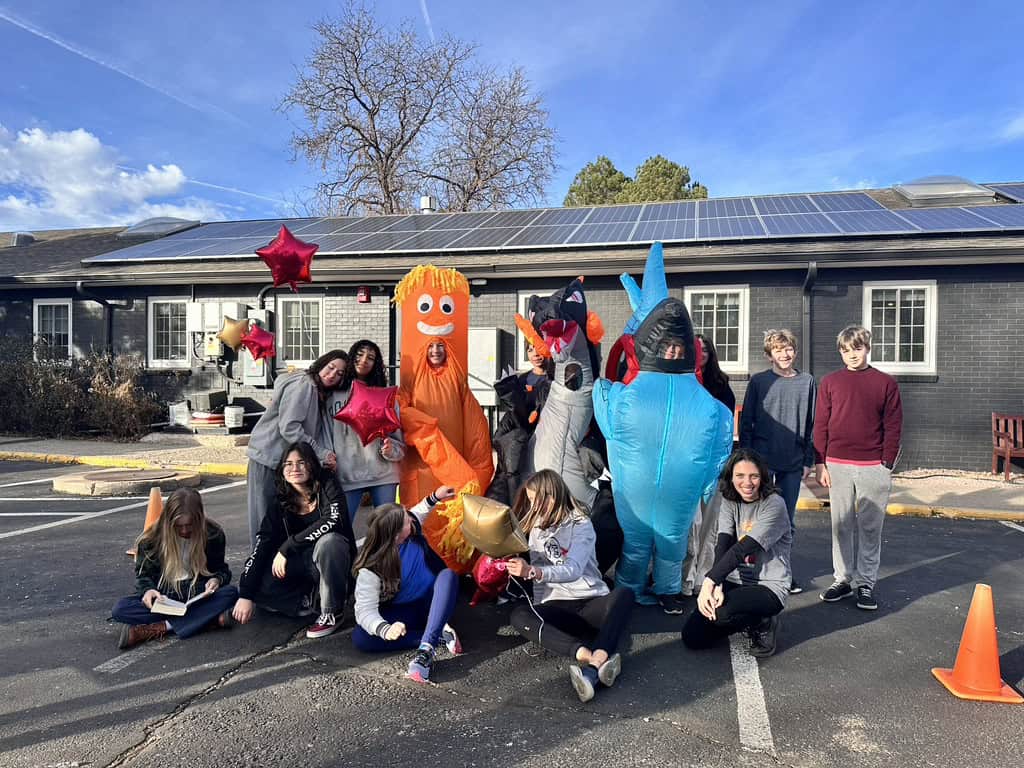
We believe that learners should be inspired by a wide range of new experiences during their elementary and middle school years. For an IB World School, we exceed required Specials programming in all special class areas. We intentionally balance our program to ensure our K-8 learners feast on a rich diet of specials classes and programming that help them discover and hone their passions and interests.

Mac Boulder K-8 Specials Classes:
- Design and Innovation
- Library
- Performing Arts
- Physical Education
- Science
- Social Emotional Learning (SEL)
- Spanish
- Visual Arts
OUR Commitment to Holistic Programming
We believe that learners should be inspired by a wide range of new experiences during their elementary and middle school years. For an IB World School, we exceed required Specials programming in all special class areas. We intentionally balance our program to ensure our K-8 learners feast on a rich diet of specials classes and programming that help them discover and hone their passions and interests.
Mac Boulder K-8 Specials Classes:
- Design and Innovation
- Library
- Performing Arts
- Physical Education
- Science
- Social Emotional Learning (SEL)
- Spanish
- Visual Arts